My title

How a Website Works for Small Business Local Marketing

Discover:

  • Why your Website is an important Information Hub

  • How a Website Works as part of the Internet

  • How the Search Engine Results Page Works

  • What are the 2 Kinds of Websites

  • The top 10 Components of a Good Website

Why Your Small Business Website is an important information HUB

Your website is one of the most important Local Marketing tools for Small Business Growth.
In the Customer Journey, your Website helps potential customers who are ready to buy find your local business, become informed, consider options, learn more about your Company and take the necessary action to become a new customer.
How a Website Works to Rank on Google in Port St Luice Stuart Vero Beach
I can’t find your business
But they can’t consider your business as a solution to their current need if they don’t see your website when they do their search using a Search Engine like Google, Bing or Yahoo.

How a Website Works as part of the Internet

How a Website Works Port St Luice Stuart Vero Beach

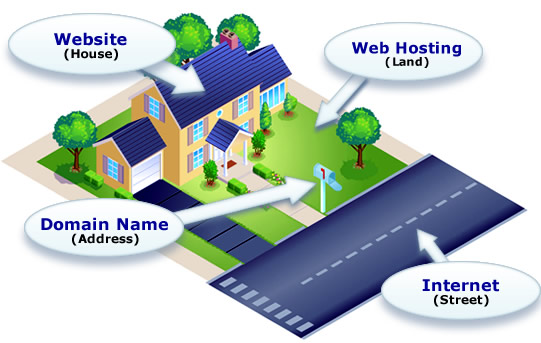
A Small Business Website, like a house, is a place where your customers go to accomplish important things.
The Land is where you will place your home (your website). A Website Hosting Company manages a group of large computers where your Website Files will be stationed.
There are two basic types of Website Hosting. Shared Hosting, where your Website files are on the same Server (a group of computers with a shared IP Address that contain many Websites and their Website Files). And there is Managed Hosting on a Virtual Private Server where only a limited small number of chosen Websites and their Website Files reside. Think of Managed Hosting on a Virtual Private Server like putting your Home in a Gated Community where there is a careful screening process to get in and in addition to armed security there are service people there to take care of things for you.
A Domain Name, example; www.yourbusinessname.com, is like your home address. It must be Registered each year of use, with a Domain Name Registrar Company.
The same way people come to visit your Home using your address, a GPS, and the Highway – your Website works the same way on the Internet. People learn of your Website Address, (www.yourbusiness.com), type it into a Web Browser software like Internet Explorer, Firefox, or Chrome and the Web Browser connected to a Search Engine like Google, (just like your GPS) knows how to get to your Website Address and bring back the information requested (your Website Pages).

Growology can register your domain and offers our customers Fully Managed Hosting on a VPS for only a few dollars more per month than shared hosting.

Learn more about Hosting Differences:

Shared Hosting vs. Fully Managed Hosting on a Virtual Private Server


What are the 2 Kinds of Websites

A Digital Brochure is the term often used to describe a website that has not been designed using Search Engine Optimization Best Practices for Small Business Local Marketing and therefore is not easily found online when people search for a product or service like you offer and therefore does not generate New Business Leads and Sales.
How a Website works that sits stagnant without having additional content added regularly is that it will be considered of less value by Google Search Engine and will slowly begin to rank lower and lower in the Search Results over time.
The only way to generate new business with this kind of website is to direct people to it in person, via email, in social media postings, or using paid advertising channels like Direct Mail, or online advertising like Google Ads, Facebook Ads, or others. Even though direct marketing programs like Hometown Favorites – New Mover Welcome Service Direct Mail provides a great response rate averaging 4% – 20%, not taking full advantage of your website’s ability to help you generate a steady stream of new customers is a costly mistake.
When a potential customer types in a key word phrase like [Dentist] [your city] and your Website shows up on the first page of results (called the SERP -Search Engine Results Page) on Search Engines like Google this good outcome is known as Ranking Organically. It means that without paying for Ads Google determined your website to be important enough to show near the top results.
In a competitive industry, which most small businesses operate in, this outcome only occurs when a Website is designed using SEO (Search Engine Optimization) Best Practices and when there is a continual process of improvement and new written content added which is a key Ranking factor used by Google. When someone uses a Search Engine like Google to look for a product or service like yours they are likely ready to buy or at least in the consideration step along the Customer Journey. The better your ability to meet people at the time and location where they are ready to buy products or services like yours the lower your cost of new customer acquisition and the better your return on investment of marketing dollars. This is why continually investing in SEO for your website so it ranks on the first page of Google results will over time become one of the Highest Return on Investment methods to generate new business.
Also see What is SEO and How SEO works

How the Search Engine Results Page works


How a Website Works for Google Page 1 Ranking in Port St Luice Stuart Vero Beach

This is an important and key part of the Customer Journey toward a solution.
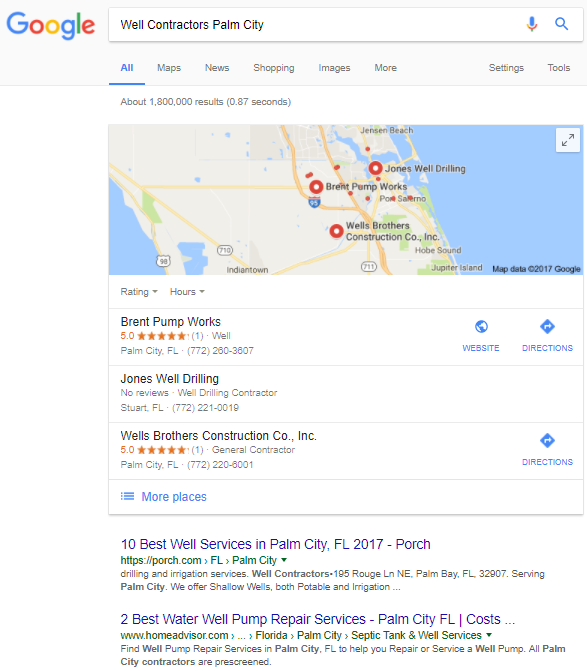
“Google” is the Search Engine
The Search Phrase also called the Keyword Phrase is the string of words someone uses to look for their need
This is a Paid Advertisement. Also called PPC or Pay-per-Click Advertising Each time someone Clicks on the Ad the Business Pays a fee.
This Section is called the Map Listings
The Top listing Brent Pump Works has a 5 Star Review and a Website Link
These listings are the Search Engine’s Results Page Organic Results and Brent Pump Works shows up #2 Organically. Organic means the non-paid results that show up. There are 10 of these results on the first page of Results and being on the Map and in these results allows customers to find your business.
Where your listing is in these results will have a significant impact on the outcome or number of times your listing will be clicked and a potential customer directed to your website or a page on your website. For example, the First Listing will on average be clicked 32% of the time, the second listing 14%, the third listing 10%, the 4th listing 7%, the 5th listing 5.5% and the 6th thru the 10th share about 4% of the clicks. There are factors that impact these percentages however like the Map Listings which account for 30% or greater of all clicks.
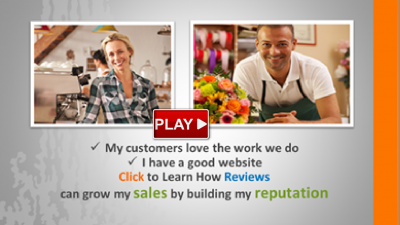
It’s important to understand that multiple factors can have an impact on your local marketing success. One example is the Positive impact of Reviews and how positive reviews can significantly impact click thru rates and lead to more sales volume. To Learn more about how Reviews Impact you favorably watch this short video.

The Top 10 Components of a good Website

Your website represents your company and it’s Unique Value Proposition.
Your website should;
  • Be Easy to find – Meaning you have designed it considering all the key word phrases customers may use when seeking products and services like yours.
  • Your website should load quickly as keeping customers waiting may cause them to turn away.
  • Be Responsive which means it resizes to display correctly on any device without the user having to scroll to the right to see the page content.
  • Upon arriving on each landing page, present a well-defined Unique Value Proposition which communicates in just a few seconds how your business’ solves the related needs of their customers. This goal is sometimes referred to as “the 3-second rule”.
  • Clearly convey the benefit your customer will experience when using your products or services. This can also be conveyed in your Unique Sales Proposition also known as your slogan.
  • Be Easy to navigate to relevant information. This sounds obvious but it is amazing how many company websites have a terrible user experience because the visitor can’t access relevant information or the information is too hard to find.
  • Be Informative. The best way to help someone consider if your business solution is the right one for them is to make all the relevant information available.
  • Give them clear next steps to take for moving forward in the consideration or purchasing process. These are referred to as your CTA’s or Calls to Action.
  • Allow potential customers to know about you. Your values, personality and the company standards that will impact the relationship. The About Us is one of the most visited pages on a Local Small Business Website for this reason.
  • Make contacting you easy with Phone Number shown in prominent places on each page, ideally in or Near the Top Menu.
I hope you found this article helpful and would enjoy hearing your comments.  To learn more about how to create a steady stream of new customers and more free time check out the related articles and our Managed local marketing solutions including Website Design, New Mover Welcome Direct Mail and Managed Online Marketing for your small business on growology.com

How to Create Competitive Advantage for Small Business Growth

What is Competitive Advantage?

Competitive Advantage occurs when you develop a Unique Value Proposition, the Why we Exist (Our Purpose) combined with the Values, Personality, Cultural and Operational Approach we employ to deliver our Products & Services in a way Customers find uniquely valuable and the obvious choice.

Developing a Unique Value Proposition involves more than just being different.

Creating Competitive Advantage is a discipline, a habit of never ending growth thru the continual improvement of your Unique Value Proposition, that begins with the mindset of the business owner or operator. The cornerstone of the most successful mindset is a purpose founded in the joy of serving others and a fascination with understanding how your team can, thru the delivery of your products and services, impact the lives of people in a positive manner.

4 Key considerations of a Unique Value Proposition that creates Competitive Advantage

People / Product / Process / Promotion

Here are three Case Study examples of what happens when leadership focuses on creating the Competitive Advantage of a Relationship based Culture focused on serving others.

#1  Chick-Fil-A is Quick Serve Restaurant selling Chicken Sandwiches

Are their sandwiches better than say, Zaxby’s, who makes a quite tasty chicken sandwich, or any of 8 other Quick Serve Restaurants that sell Chicken as a primary item?

And why is Chick-Fil-A so successful without selling burgers when most QSR’s who sell burgers also sell Chicken Sandwiches?

How is it that Chick-Fil-A has less menu selection, is open fewer days per week (only 6) and yet they are by far #1 of all the QSR’s?

A Relationship focused Culture is the Competitive Advantage which makes them by far the #1 most profitable per unit fast food chain with average profit per unit at 310k in only 6 days of weekly operations.

When compared to #2 McDonalds Chick-Fil-A makes 25 – 29% more sales and profit per unit per day.

And the operators are completely off on Sundays = more FREE TIME

Source Facts: click: Top 50 QSR Report

#2  Then there is the Story of Southwest Airlines who, while among an industry plagued with Bankruptcies and year over year losses of 2 Billion dollars from legacy carriers like American Airlines and others, have managed to remain profitable each and every year of its 41 years of existence.

So is value price the only differentiator that makes Southwest so Popular?

Or could it be their well-articulated shared purpose that has been fully embraced by the Southwest family?  Watch the Video below to see what you think.

Friendly (Relationship Focused)

Here’s an example of how Southwest creates Fun Memorable Experiences
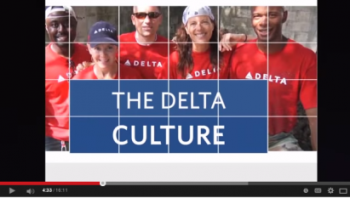
 

#3  Then there is Delta who recognized it had gotten away from founding principles of Culture and so while coming out of Bankruptcy court in 2007 they embarked on a 4 year turnaround focusing on developing Culture as a Competitive Advantage leading them to being ranked as the 10th most profitable airline in 2014.
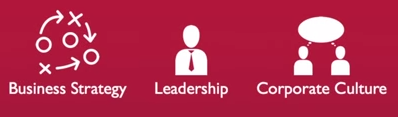
 

It was thru aligning Strategy, Leadership and Team Culture that they were able to rebuild a foundation for Success.

See the Ted Talk

Why creating Competitive Advantage leads to faster Growth

Creating a Unique Value Proposition that leads to Competitive Advantage means that your business is benefiting the people in the community in the best possible manner. A goal worthy of pursuit. It also means you are likely becoming highly effective at getting the right people on your team and becoming increasingly effective at transferring your skill sets to the leaders among your team which is an executive level skill known as Transformative Leadership.

Without thinking about Competitive Advantage many small business owners and operators don’t see the benefits of their hard work. Instead, they fall into the mindset trap that the only way to differentiate their business is to get into a coupon war over price, which leads to a slow agonizing profit death and the eventual death of the business. In contrast focusing on the steps necessary to differentiate your business based on performance or customer intimacy can have a positive effect for everyone concerned.

The ability to differentiate your local small business thru Competitive Advantage opens the door for your business to grow while you also have more free time to spend with your family.

How to Create and Maintain Competitive Advantage

The 2 most important questions to creating a Unique Value Proposition are;

  • In priority order what specifically are the needs and wants of my Customer?
  • Are you able to meet those needs in a significantly more effective way than any other local small business competitor?

Understanding the needs and wants of your customers will help you define which Value Disciplines to pursue first. If you are uncertain look for Survey Reports conducted by Trade Associations in your Industry. For a list of Trade Associations visit our Resource: Small Business Trade Associations

Next, as a part of your Marketing Plan consider the four key parts of your Value Proposition, people, product, process, and promotion. Here are a few questions that will help you define the Value Disciplines to pursue;

  • How can we consistently get the right people on the team and help them grow?
  • Do we focus our efforts on delivering a product or service that aligns best with my customer’s needs and wants?
  • How can the processes we use provide the highest level of performance?
  • What is the best way to help the people in our community become aware of our products and services and how it benefits them?

Selecting Value Disciplines for Competitive Advantage

The following Guide will further help you consider your Value Disciplines to build a growth strategy and Competitive Advantage.


Process

  • Cheaper
  • More Convenient
  • More Efficient

Process Leaders

MORE EFFICIENT

“Leaders in Operational Excellence”

Process Leader Factory

Raises the bar of competition thru increasing Efficiency,

Systems / Process / Supply Chains

Sets Standards for:

  • Minimal Cost
  • Minimal Waste
  • Maximum Convenience

Organizationally:

  • Highly Standardized and Centralized Operations with tough penalties to eliminate waste

Process - eliminating waste

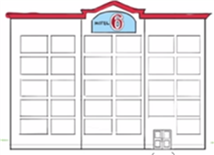
Example:  Motel 6

Process - Motel 6

Value Proposition
“Clean comfortable rooms at the lowest price of any chain”

= Quality & Value

Product

  • Better Technology
  • More Features
  • Cooler Style
  • Superior Quality

Product Leaders

BEST PRODUCT

“Distinctive & Superior Product”


Pricing not focused on bargain

Service may not be the best but these factors are compensated for by performance or features of product itself

Raises the bar of competition by constantly increasing product Performance,

Sets Standards for:

  • Technology, Style, Features, Speed
  • Imagination, Invention, Innovation
  • Heavy investments in R&D & new Market Exploration

Organizationally:

  • Loose, Flexible, Fluid & quickly adaptable to new product initiatives
  • Rewards rare product success without punishing for the many failed attempts that are necessary to achieve rare success
  • Engineering is #1 even if Cost or Service is Secondary


Example:  BMW


BM-W is No 1

Value Proposition
“The Ultimate Driving Machine”

Customer Intimacy

  • Better Service
  • We Listen
  • Anticipate Needs & Wants
  • Tailored Solutions

Customer Intimacy Leaders

SERVICE/WHAT THEY WANT

“Outstanding Service”

“Providing the Best Solution Tailored to each customer’s Unique Needs”

Pricing not focused on bargain

Performance may not be the best, nor will product be most distinctive or cutting edge but these factors are compensated for by the Superior Service the Customer Intimacy Leader uses to anticipate, understand and fully meet the needs of each carefully selected customer.

Ultimate Goal: To create a lifelong bond with customer


Raises the bar of competition by giving customer all they want

Sets Standards for:

  • Service
  • Convenience
  • Customer Intimacy

Organizationally:

  • An extreme level of delegation and decentralization so decisions are always made by employee who is close to the customer.
  • Requires implementation of information systems that keep track of each customer’s unique needs and preferences

Custom Systems for Competitive Advantage


Example:  Ritz Carlton

Value Proposition
“A place where the genuine care and comfort of our guests is our highest mission.  We pledge to provide the finest personal service and facilities for our guests who will always enjoy a warm refined yet relaxed ambiance.  The Ritz Carlton Experience enlivens the senses, instills well being and fulfills even the unexpressed wishes and needs of our guests.”

= Quality & Value

How Online Review Management can grow Small Business Sales by up to 18%

Review Management is one of the most overlooked and yet simplest ways to grow your business Sales by 9% up to 18%.

According to a report by Harvard Business School professor, Michael Luca,  Privately owned restaurant’s sales grew by 5% for each star rating acquired on Yelp.

According to a report by Econsultancy improved reputation accounted for Sales growth of 9-18%. Share on X

Why is a Reputation Management tool necessary?

First, it’s important to understand that manually entering reviews does not give you Google Review credit.  This means Google does not recognize it as a Review but rather sees it as content. Reviews are one of the ranking signals Google looks for when assigning a website’s Ranking value.

Second, the manual process of requesting and hoping customers post a review to Google or one of your Social Sites is not a practical process as the vast majority of customers will forget.

Here’s why is a Review Management Tool considered one of the best low cost and simplest Marketing strategies:

To briefly summarize a good Reputation Management Tool will:

  • automate the process of asking for reviews thereby increasing your success rate by 5 X or more

  • allow you to first gauge Customer Intent so you may be able to Recover if a customer is unhappy before they leave a review online

  • direct customers to review sites that matter to you, including niche industry sites

  • give your website’s Google listing a search engine ranking boost because the tool streams your reviews to your website and social media sites in “rich snippet markup” format

To learn specifics of how Google Search Rankings work and how much a Review Marketing Tool can boost your reputation and sales check out this short informative video.

Review Management_Explainer Video

Host Beneficiary Marketing-Part II Step-by-Step Guide

Here is a Step-by-Step Guide to develop your Host Beneficiary Marketing campaign:

Host-beneficiary marketing is a great low cost strategy and fairly simple technique that will help you gain new customers.  Before we move into the steps let’s review a few key concepts.

Key Concepts:

Why should I define a target or customer group?

  • Defining a target customer group allows you to narrow your focus and conserves valuable time and resources to be used on potential customers who have the best potential to become a good fit for the products and or services you offer. These well defined targeted customer groups are also sometimes referred to as your ideal customer.

How can I define a target customer group?

  • To define a target customer group use Demographic and Psychographic segmentation.

Demographic Resources

What is the difference between Demographic and Psychographic segmentation?

  • Demographics is a consideration of the quantitative makeup of a population. This helps us determine quantifiable subsets of a population.  Some demographic considerations include; Age, Gender, Education, Geography, Income,  Mobility,  Race and Ethnicity.

  • Also consider the Psychographic Segmentation of your customer which are qualitative lifestyle considerations like values, interests, attitudes and traits. These lifestyle considerations help you understand where to meet your customer by understanding what’s most important to them.  For example if you are in the shoe sales industry and have a line of cross training shoes thru some research you may learn your target customer group is most commonly also concerned about the kind of foods they eat so you would develop a host beneficiary marketing campaigns with host businesses where healthy living products and services are the predominant offering.

Answering these questions are the steps to create your Host Beneficiary Marketing campaign strategy.

To answer question one and two about your target audience consider Demographic and Psychographic Segmentation using your available information and the resources noted above.

  1. Who is your target audience?

  • Be as precise as possible defining your target audience. “Men 35 to 55” might be a start, but it’s likely not good enough. You need to create a detailed profile of your target customer. The more precise you are the easier it will be to find potential hosts and generate quick results.
  1. Where is the best places to meet my customer?

  • Once you have established a clear understanding of your target audience it’s time to consider host business organizations that may be serving the same target audience.
  1. What other businesses are serving this same customer group or segment?

  • When considering these businesses also consider the accessibility of necessary decision makers.  For example large box national brand retailers will be more difficult to connect with key decision makers versus privately owned local business operators.
  1. What can I offer as a value ad consideration “gift” that will benefit my business and the Host business?

  • Develop a clear offer for each prospective partner. Your offer could be a free or deeply discounted product or service that has a high perceived value for the consumer with a low cost for you.  In most cases a $50 discount on a $500 item is not going to cut it.
  • Talk to the host business who will become your partner and convey the value of the relationship. For example you will help them understand that this is a great no expense way to reward their customers and how this will take very little effort.
  • Take action and implement quickly. You can give the host business gift certificates or providing a draft “offer” via email, or a letter that the host can transfer to their letterhead and then share with customers. This will help your host partner to see how easy the process will be as well as help them put the plan into motion quickly.
  1. How will I most effectively develop good relationships with potential customers as well as communicate our business offerings when prospects arrive with the special offer?

  • Develop a strategy to convert first time customers to repeat customers. This, after all, should be your long-term goal. The strategy is to get new customers at little or no upfront cost, and then getting them to come back and patronize you again and again- which should be easy if their first time experience with you was pleasant.
  1. Track your results to assess your ROI and ways you can revise for even better results on your next Host Beneficiary Campaign.

Whatever the specific plan, the host-beneficiary method is the single most effective way to quickly attract sizable amounts of qualified customers to a new business and jumpstart sales.

Host-Beneficiary Marketing

Is Host-Beneficiary Marketing better than coffee? There are a few of us that may think nothing is better than a good cup of joe.  And if you are a Starbucks fan well that’s a whole ‘nother level of jump up and down, can’t live without it, coffee love, right there.  But we will leave that fun for another post.

Today I want to share with you a commonly overlooked low cost technique to grow your business called “Host-Beneficiary Marketing

If you’re a business owner or leader one of the most overlooked and often highly successful ways to develop new customers in your business is a method that involves forming “host-beneficiary” relationships. To accomplish this you develop a mutually beneficial relationship with businesses that are potentially further along in their business lifecycle stage and serve a demographic or psycographic audience similar to yours. That business is the “host”.

Using a well thought out special offer provided as a gift from the older business, the “host”, you are able to market your business to their base of customers making you the “beneficiary”.

The host business benefits by being able to offer an additional value add consideration to their potential or existing customers without any additional costs, while your business can soon connect with sizable numbers of highly qualified prospects with an indirect and implied endorsement of the established business, the “host” leading to new customers.  In the best cases the host business will also directly endorse you.  This creates a mutually beneficial relationship.

Here is a Host-Beneficiary Marketing example: One “beneficiary” new business owner who just launched an upscale self serve dog wash facility meets with several dog breeding businesses in the area and offers free dog wash gift certificates for customers who purchase certain expensive breeds of large dogs.  The breeders then give away one dog wash gift certificate to any customer who purchase a dog as a thank you gift.

Over the next three months 750 Dog wash gift certificates are given out thru the dog breeders and of those 300 come to have a free dog wash and while there learn about the new business.  75%, or 225 customers, make purchases of ancillary items for sale at an average sale of $18.00.  Additionally 35% of the 300 sign up for monthly memberships at the dog wash yielding 105 new memberships.

The cost of each free self serve dog wash was $1.05 or a total cost of $315 and yields $4,050 in ancillary sales and 105 new monthly memberships x $19 per month x 12 months = $23,940.

While variables will be different in your business situation you can see the major ROI potential of this kind of low cost small business local marketing strategy.

To learn more and gain access to a specific Step-by-Step strategy guide see Host-Beneficiary Marketing Part II at www.growology.com/blog

Growology.com “Local Marketing Made Simple” We love the work of helping small business owners grow.  We build responsive wordpress websites and can manage your local marketing strategy to give you more time to do the things you’re most passionate about.