My title

Top 10 Mindsets for Competitive Advantage and Organizational Health

This post is about reflection upon our Outlook and associated thinking Habits and how those habits may be hurting or helping our potential for success.

So our question is; What kind of Mindset achieves Organizational Health and creates a foundation for an organization to reach it’s fullest potential and even becomes a Competitive Advantage?

Let’s say you are the leader of your team and your organization is looking for a new team member, say a location manager.  Would you simply look at a piece of paper, speak to a candidate for 10 minutes and make a hiring decision?

I bet you thought of a few other methodical steps.  Yet many leaders, due to the pace or overload of responsibilities continue to hire using a process that is primarily based upon gut instinct.


First let’s realize a truth about any organization’s culture and the impact that culture has on the potential for success.

“as the leader goes,
so goes the team.”

Next let’s briefly consider the impact of two different kinds of leader.  The Fixed Mindset “I” leader vs a Growth Mindset “We” leader.

Are you a Leader with a "Fixed Mindset"
Limited Potential Outlook
Or a Leader with a "Growth Mindset"
Fullest Potential Outlook
Outlook"I" centric
"We" centric
MotivationServe MeServe Community
Primary FocusAnalyticalRelational Health
Leadership Style"I" control
- Decisions need to all come thru me first
Shared Leadership
- Empowerment of others
Conflict ReactiveProactive plan to listen
CommunicationAdvocacy of personal viewsInquiry of Information
AccountabilityGuarded
- surrounds with enablers
Transparent
- seeks truthful feedback
AccountingClosedOpen Book
Sales MantraCompany-centric
- How to Close the Deal
Customer-centric
- How best to serve the customer
ValuesWhatever works in the momentStrong convictions allow consistent clarity
RESULTSWears many blinders
- Limited Potential
Aware of strengths and weaknesses
- Builds a leadership team that compliments each other well

Grow by Avoiding this Mistake of Busy Small Business Owners

For Faster Small Business Growth and More Free Time avoid this Mistake

2 Minute Drill Growth Series

Imagine a man and his family are new in town. It’s about 1 AM and his 3 year old daughter has developed a high fever and needs medicine. The man’s wife is fearful and says “hurry”. So the man gets in his car and drives aggressively in pursuit of Medicine. While driving the man sees a 24 hour Grocery Store and goes in but the pharmacy is closed. The man remembers passing a different 24 hour grocery store on their way into town and drives there but same outcome. Leaving the man sees a Hospital Sign and diligently drives there. But the volunteer tells him the pharmacy closed at 9. While leaving, the man’s wife calls and says “Where are you? It’s been 45 Minutes and we need Medicine?” to which the husband replies “I’m working really hard on getting it, I don’t have time to spend speaking with you right now.” And hangs up.
So the wife, now calls an experienced Friend with 5 children and asks for guidance. After that conversation the Wife, using her cell phone, searches for a 24 hour pharmacy near her and finds one 8 minutes from her current location. The wife wakes up her visiting sister and asks for help while she goes out. Using her phone the wife follows the map to where medicine is and returns home in 20 minutes. The husband, not aware his wife took care of the need, returns home, without medicine, telling his wife he could not find medicine and suggests they take their daughter to the Hospital.
Outside the situation it seems so easy to see what’s wrong. “What’s wrong with you man?! Ask somebody for help!” and “Use Google…”
Here are 2 Key Insight from this Story:
  • Ask for Help from someone with Experience navigating thru what you’re going thru: Fact: If you sit at a table of growing Small Business Owners the #1 issue is “Not Enough Time” so your challenge is perfectly normal.
    • Being in the maze often we can only see what’s in front of us. Seeking out a Mentor, or Sidekick (someone with experience navigating thru what you’re going thru) can help you see the whole maze from 30,000 feet and get you to your target of faster Small Business Growth and More Free Time.
  • Use a Strategy: In the story the Wife used a clear Strategy, Asked for Help, took advantage of the right technology tools, including a Map to save time and reach her goal.
    • Fact: Less than 10% of Small Business Owners use any sort of Formal Strategy and Measurement in their business. Not using a Strategy Map with Clearly Defined Goals will keep you from what you really want. More free time with family and doing the things you are passionate about.

For faster Small Business Growth and more Free Time

Small Business Owners who operate in the top 10% of their industry, have the habit of asking for help and using a Small Business Local Marketing Plan as part of their Strategy Plan.
Action Challenge: Develop a relationship with a Mentor or Sidekick. Someone outside your organization with relevant experience who can help you grow to the next level.
FREE Resources: Get the Can Do 35 Min. Marketing Plan, and other Local Marketing Growth Resources

7 Things Strong Leaders Do

Strong Small Business Leaders…

 1.    align Actions with their PERSONAL VALUES

  • Their Values are OTHER focused. They understand that life’s greatest rewards are achieved thru building INTERDEPENDENT RELATIONSHIPS and so they see their work as a platform filled with OPPORTUNITY to make a positive difference.
Watch the MOST INSPIRING “Other focus” COMMERCIAL I HAVE EVER SEEN
  • Their Values are guided by biblically based CONVICTIONS. They are not lead by emotions or swayed by the need to be a “People Pleaser”.  Led by biblically based Convictions they see CLEARLY the path that is most beneficial and fair for all parties concerned.
  • Their Values lead them to work in their PASSION Zone. They have taken the time to discover what they are most passionate about and seek to align their work with their passion.

2.   are Tenaciously FOCUSED

  • They clearly understand what they are going toward and are not distracted.  Often people give up just before the obstacle was about to be overcome.
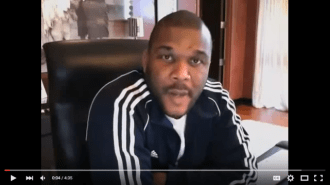
Watch as Tyler Perry gives a short powerful explanation. 
  • Using a Business Plan or Marketing Plan they remain Focused with the Discipline of Patience.  Just as a Bamboo Farmer must do the disciplined work of preparing for the success they too understand that success is not something that comes immediately.
Learn about the Miracle of the Bamboo and the Success Lesson it teaches

3.    have a GROWTH MINDSET

  • Thier growth mindset of a strong small business leader allows them to see FAILURE as “not yet” and a learning opportunity, bringing them one step closer to the goal.  Thomas Edison understood this with over 2,000 attempts at creating the light bulb.
Watch as Carol Dweck shares the Radical Power of a Growth Mindset in her Ted TalkGrowth Mindset_Ted Talk_Carol Dweck
  • Their growth mindset allows them to embrace CHANGE.  Growth involves the unexpected. They keep control of their attitude and are able to quickly adjust to different circumstances positively.
  • Their growth mindset allows them to exude a POSITIVE ATTITUDE thru discomforts. They see enduring challenges as an even greater opportunity to encourage and impact the lives of others.
  • Their mindset and or time perspective is to live in the PRESENT. They embrace sharing from what they learned in the past while moving on without dwelling there. Though they make plans for the future, they have an appropriate “actions speak” now focus.

4.    Strong Small Business Leaders ASK FOR HELP

  • Whether they need help with developing a Competitive Advantage or creating a Marketing Budget Small Business Leaders see asking for help from their team and outside experts as a wise habit.  Recognizing each person has a set of gifts that is a compliment to another person, they are able to lead the group to their greatest potential.

5.    are ACCOUNTABLE

  • They seek a multitude of council and embrace accountability thru an environment of shared leadership. They accept personal responsibility for failure and share the accolades of success with others thru a process of measuring progress.

6.    COMMUNICATE well by LISTENING

  • They understand what active listening is and how it benefits their success.
  • They seek first to understand the needs of others then communicate in a straight forward manner that is kind and fair.

7.    make time for RESTORATION and GROWTH

  • They identify themselves as “worthy” and so prioritize personal time for; spiritual growth, time to rest and refresh, continued learning, physical training, good nutrition and other important habits that allow them to reach their full potential.
What are some other things you see Strong Leaders doing that lead to Significant Impact in the lives of others?

How to Design a Unique Selling Proposition

A Unique Selling Proposition also referred to as your Slogan or Advertising Tagline is your description of HOW your (UVP) will be found so BENEFICIAL that it is the obvious choice
  • A good “Slogan” conveys the Benefit your product offers in a memorable way while the What you do may be implied or directly included.
Successful Unique Selling Propositions evoke strong emotions or desires which may be fun, laughter, fear, control, sense of duty, performance, prestige, restoration, a desire to be unique and others. See if you can identify which emotions and desires the Brands below were targeting with these memorable slogan examples.


50 of the Most Influential Taglines

  1. “A diamond is forever” – DeBeers, 1948
  2. “Be all you can be” – The US Army, 1981
  3. “Because I’m worth it” – L’Oreal, 1967
  4. “Beef. It’s what’s for dinner” – National Cattlemen’s Beef Association, 1980’s
  5. “Betcha can’t eat just one” – Lays, 1981
  6. “Breakfast of Champions” – Wheaties, 1930
  7. “Calgon, take me away” – Calgon, 1970
  8. “Can you hear me now” – Verizon, 2002
  9. “Don’t get mad. Get GLAD” – Glad 1980’s
  10. “Don’t leave home without it” – American Express, 1975
  11. “Double your pleasure, double your fun” – Wrigley’s Doublemint, 1959
  12. “Eat more chickn’ ” – Chick-fil-A, 1994
  13. “Finger lickin’ good” – KFC, 1952
  14. “Fly the friendly skies” – United Airlines, 1966
  15. “Get more” – T-Mobile, 2005
  16. “Got milk” – California Milk Processor Board, 1993
  17. “Have a Coke and a smile” – Coca Cola, 1979
  18. “Have it your way” – Burger King, 1973
  19. “Hey, Mikey…He likes it! – Life Cereal, 1972
  20. “I can’t believe I ate the whole thing” – Alka Seltzer, 1966
  21. “It keeps going, and going, and going” – Energizer Batteries 1989
  22. “It takes a licking and keeps on ticking” – Timex, 1950’s
  23. “I’ve fallen and I can’t get up” – LifeCall, 1990
  24. “Just Do It” – Nike, 1988
  25. “Let your fingers do the walking” – Yellow Pages, 1964
  26. “Look Ma, no cavities!” – Crest Toothpaste, 1958
  27. “Melts in your mouth, not in your hands” M&M’s 1950’s
  28. “Pardon me, do you have any Grey Poupon?” – Grey Poupon, 1980
  29. “Please don’t squeeze the Charmin” – Charmin, 1964
  30. “Plop, plop, fizz, fizz, oh what a relief it is” – Alka Seltzer, 1953
  31. “Reach out and touch someone” – AT&T, 1979
  32. “Share the Fantasy” – Chanel No. 5, 1979
  33. “Snap! Crackle! Pop!” – Kellog’s Rice Krispies, 1932
  34. “The few, the proud, the Marines” – U.S. Marines, 1991
  35. “The happiest place on earth” – Disneyland 1960’s
  36. “The other white meat” – National Pork Board, 1986
  37. “The quicker picker-uper“ – Bounty, 1991
  38. The Ultimate Driving Machine”, 1975
  39. “The UnCola” – 7UP, 1973
  40. “They’re grrreat!” – Kellog’s Frosted Flakes
  41. “Think different” – Apple, 1990’s
  42. “Think outside the box” – Apple, 1990’s
  43. “Think small” – Volkswagen, 1959
  44. “We bring good things to life” – GE, 1981
  45. “We try harder” – Avis, 1962
  46. “When it absolutely positively has to be there overnight” – FedEx, 1982
  47. “When you care enough to send the very best” – Halmark, 1934
  48. “Where’s the beef” – Wendy’s, 1984
  49. “With a name like Smucker’s, It has to be good” – Smucker’s, 1962
  50. “You’re in good hands” – Allstate, 1950’s
Remember in each of these Unique Selling Proposition examples the focus is on a key Benefit of the product or service. Now thinking about your product or service consider the personality of your business and write some taglines that describe the benefits your customer will experience. Next, share your Advertising Tagline examples with as many people as possible to see if there is a consensus as to which one is most commonly favored.
Then you are ready to use your Unique Selling Proposition aka Company Tagline or Slogan on your Marketing Collateral and share with your Website Designer.
Would you like to learn more about Creating Competitive Advantage thru the process of developing a Unique Value Proposition?
Check out this Resource: How to Create Competitive Advantage for Small Business Growth

How to Establish a Marketing Budget

How Important is establishing a Marketing Budget?

Often times small business owners overlook the importance of investing in a small business local marketing budget thinking it is an unnecessary expense. Or in some cases, a business owner buys some Local Advertising but did not have the results they were hoping for and so feeling defeated by the bad experience they give up on the whole idea of Marketing.
Whether realized or not each new customer relationship involves a Cost of Acquisition. When a small business does not invest in marketing and several hours, days or weeks go by before the next customer there is a real expense to that time.
If for example you provide a service, say pressure cleaning, and the average cost of that service is $1,500.00 and you have a week where you have 3 idle days you would at a minimum take the cost of overhead, say $50 a day for a small home based business, plus your minimum necessary salary to meet your personal needs, say $200 a day and multiply that by the three idle days for a Cost of Acquisition of $750. If instead, that same business owner had, for example, the month before proactively invested $150 in a Direct Mail campaign to New Homeowners and picked up just 1 customer from his investment and that job filled the 3-day gap he would have $1,350 in additional income that week. Plus now he has an additional customer who may refer even more business.
Like every part of your business, the process of Marketing which includes a Marketing Budget should yield a beneficial return on investment that leads to growth.
Here I’ll review some best practices to help ensure your investment in a Marketing Budget leads to real growth and a good return on investment.
Step 1. Before establishing a Marketing Budget you should create a Marketing Plan. A Marketing Plan helps you establish the framework and evolving process necessary to continually reduce your Cost of Acquisition over time as you find the best Marketing Channels for Small Business Local Marketing growth.
Did you know that approximately 90% of small business owners don’t use a Marketing Plan?
And that those who do grow at 2 – 3 X greater rates.
Key Resource:

The Can Do Marketing Plan

– You’ll be done in as little as 35 Minutes

How to Establish a Marketing Budget

Commonly Small Business Owners ask the question how much should I spend on Marketing?
This depends on your current Condition and Goals.
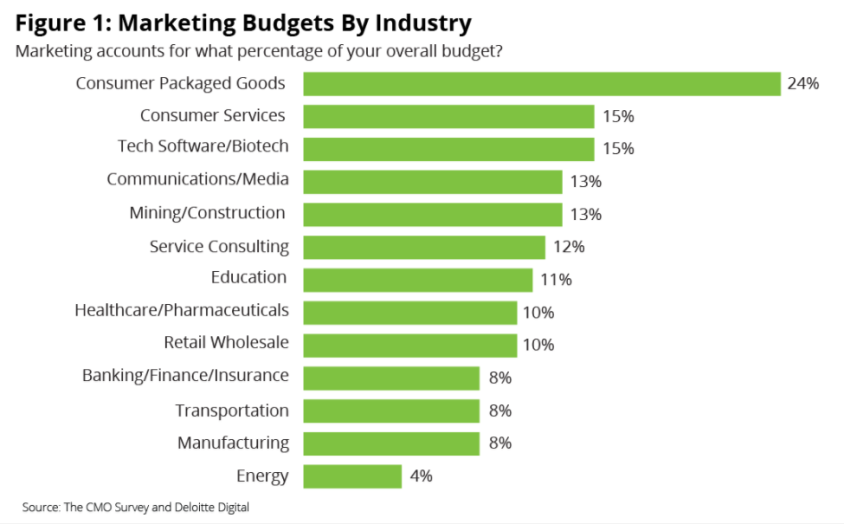
The Deloitte CMO Survey Results shown below indicated a Marketing Budget by industry that most industries spend between 8% and 15% of Gross Sales on Marketing.

How to Establish a Marketing Budget for Local Marketing in Port St Lucie Stuart and Vero Beach

Based upon experience here is a chart that can help you consider your current Condition when deciding how much to allocate to a Marketing Budget.
CONDITION SEEKING ALLOCATE
Start Up or Stagnant Growth Activation 12% – 15%
Emerging or Expansion Aggressive Growth 10% – 12%
Established Steady Growth 8% – 10%
Mature Market Leader Continued Position 4% – 8%
Gross Sales

Last 12 Months

Condition/Goal % Annual Budget / 12 Monthly Budget
X = =
The key is to start somewhere even if that is 4% and your monthly budget is $250 – $300.
To learn more about which Advertising and Marketing channels to consider checking out this Resource: The best Marketing Channels for Small Business Local Marketing growth.

Tracking your Marketing Investment

One of the most important parts of any good Marketing Plan and Marketing Budget is your ability to measure your Return on Investment.
To accomplish this you will want to have measurement tools in place that track the progress of your Direct Marketing campaigns like a New Mover Welcome Service or your Website Marketing. While this can start out as simple as using a form to keep hand written track of where customer’s heard about your business to track your Response Rate and later gross sales such a process is not nearly as accurate or effective as when you use tools like Call Tracking with unique phone numbers for each Marketing Channel or Campaign or Website Traffic and Conversion Tracking. This is partly because you and or your staff will sometimes forget to ask and partly because customers will not always remember where they initially gathered your phone number from or what source referred them to your website.

When to Modify your Marketing Budget

A Marketing Plan involves Direction, Design, Interaction, and Discovery which is the measurement of what is working. After reviewing your Marketing Budget consider which Channels have returned the best Return on Investment and when appropriate direct a larger percentage of your Marketing Budget toward those campaigns or efforts.
The exception to this rule is in cases where you are making a mid to long term investment in content development for your website. While this strategy may in the short term produce a lower Return on Investment than say an immediate direct response campaign like New Mover Direct Mail your investment will pay off to a greater and greater degree as time passes and more and more people find your business online.